
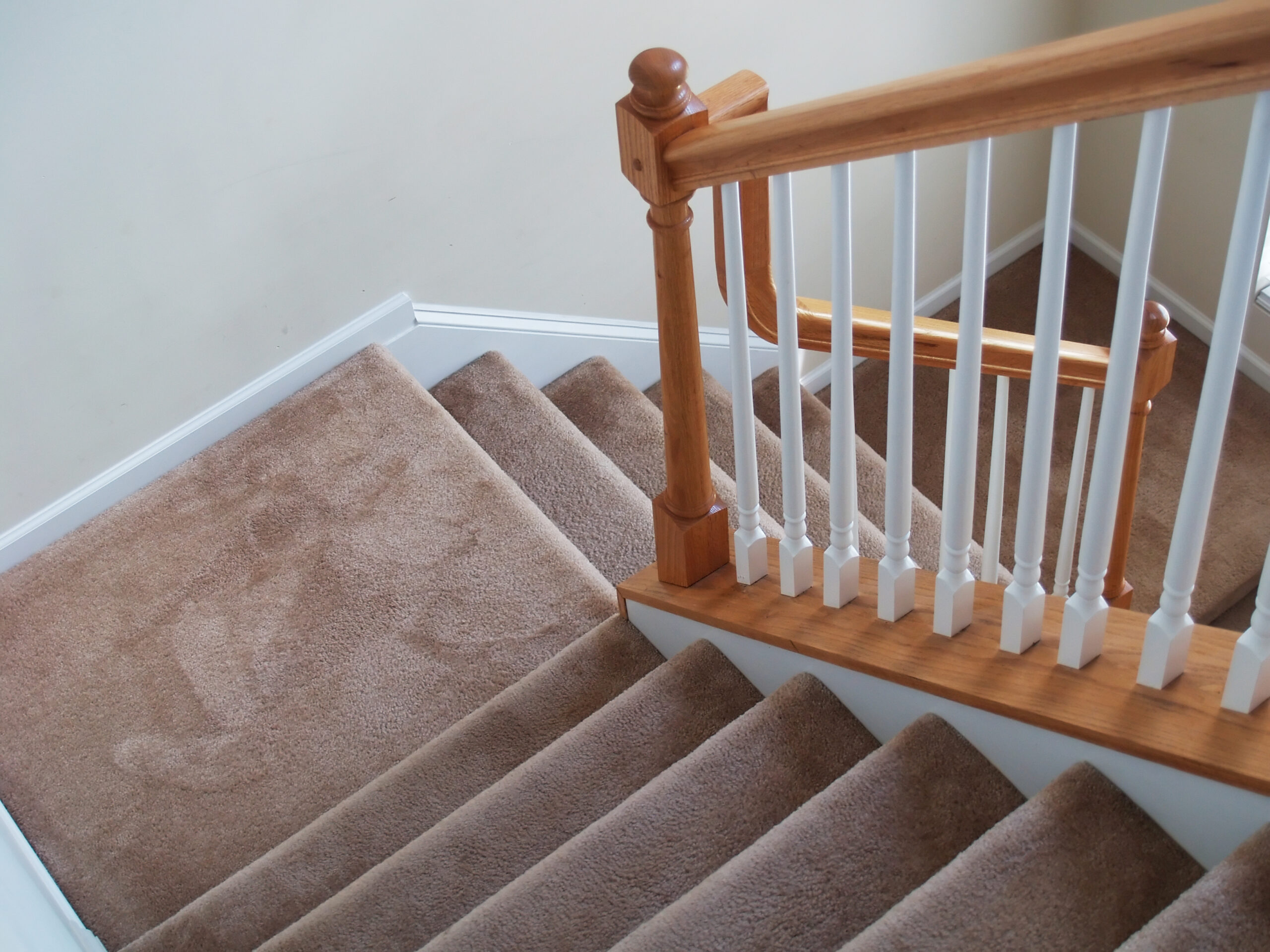
Fitting new carpets in your home can thoroughly revitalise its look and feel. Whether it’s adding fresh carpets in a single room or throughout the property and staircases, many great carpet options are available.
However, getting the measurements right is crucial to ensure that it looks the part, and adds aesthetic value in the way you want. This involves measuring properly, and for homeowners with multiple floors, working out the right carpet lengths for your stairs can be a bit tricky. Before you buy a new carpet material, with accurate measurements, you’ll know exactly how much carpet you need and have better control of your budget.
Here is a step-by-step guide to measuring stairs in preparation for a new carpet.
What You Need Before You Measure Your Stairs for a New Carpet
Measuring stairs isn’t quite the same as measuring a straight floor or room; each section needs to be measured individually rather than all at once. All the different measurements, however, add up to create an easy-to-understand number that you can remember when buying the right amount of carpet material.
Before measuring anything, do the following:
- Clear the stairs of any furniture or pictures so you have a clear area to work with.
- Have your toolkit ready – get out your pencil, paper, ruler, and tape measure.
- Note down the width and depth of any doorways on landings or in hallways
- Take note of dropbacks, alcoves, or awkward spaces that alter the shape of the stairs, landing, or hall.
- Make wall-to-wall measurements across stairways and landings, as some walls may not be entirely parallel.
- Draw a simple floorplan of the hallway and landing, marking where the stairs intersect.
Having all this information to hand will make the stair-measuring process easier and more consistent.
Terminology to remember:
- Tread: the part of the stair you step on
- Nose: the edge of the stair
- Riser: the vertical part of a step
How to Measure Your Stairs
The Landing
- Work your way down from the landing to the hallway.
- Measure the width and length of your landing, noting the dimensions of any doorways and their positioning.
- Include the top stair in your overall landing measurement. Run the tape measure over the top stair’s nose and tread.
The Stairs
- Count and note down how many straight and curved stairs you have. Curved stairs will differ in size to straight stairs so they will need to be measured individually.
- Measure each straight step from the back of the top step’s riser, with the tape measure going over the nose and down the tread of each one.
- Measure the width and note all measurements down on your floor plan.
- For curved stairs, measure its width at the widest point (from the inner corner of the narrow edge to the outer corner of the widest edge). From this, like you would measure straight steps, measure the back of the curved stair tread at its longest point, over the nose and down the riser.
The Hallway
- Just like measuring the landing, measure the hallway’s width and length, keeping note of any doorway, dropback or awkward structural feature measurements that affect the hallway’s shape.
Important Things to Consider for Stair Carpet Installations
When approaching carpet fitters and suppliers, provide them with as much information as you can to simplify the process. Take note of each step’s measurements, with all unique turns, alcoves, backdrops, and doorways accounted for. Carpet suppliers will need to understand the shape and markup of your hallway and landing, and the cumulative length of the stairs’ risers and treads to ensure complete coverage. Allowances will need to be made for uniquely shaped stairs, as you can expect.
Simultaneously, inform your carpet suppliers about the floor base materials, whether it’s made from concrete or wooden floorboards, and whether there is any underfloor heating installed. These factors could influence the suitability and thickness of carpet, so make sure you provide as much info as possible.
Professional Carpet Products and Installations Nearby
This will provide the simple steps needed to adequately measure your stairs for your new carpet. However, we recognise that sometimes this is tricky to do, and mistakes can happen. Luckily, at Homecall Carpets, we offer a comprehensive service that includes measuring, planning, and a free carpet quote. Therefore, if you don’t trust your carpet measuring skills, we can take care of that for you.
Installing stair carpets isn’t easy, so let the experts at Homecall Carpets handle it. Our skilled carpet fitters and installers will ensure we get a perfect fit, leaving your staircase looking brand-new with professional, comfortable carpets that you’ll enjoy for years to come. Contact us today to arrange a free carpet measurement and estimate!
Frequently Asked Questions
How do you measure stairs for carpet?
To measure stairs for carpet, record the width of each step, then measure from the back of the tread (the flat section) forwards, over the nosing and down the riser (the vertical section). This gives you the length of carpet needed to cover that step. Repeat the process for every stair, as dimensions can vary, and make a note of any turns or unusual shapes. These measurements provide a starting estimate, but a professional measure will also account for the carpet’s roll width, fitting method and any pattern matching.
How do you measure stairs and a landing for carpet?
Measure each stair individually, recording its width and the total distance across the tread and down the riser, including the nosing. For the landing, measure the longest length and widest width, noting doorways, recesses and any irregular areas. Draw a simple sketch showing how the stairs meet the landing and add the measurements alongside it. A carpet fitter can then work out the most suitable cutting layout, taking account of the carpet’s roll width and direction of pile.
How much carpet do you need for stairs?
The amount of carpet needed depends on the number of steps, their width, the combined tread and riser measurements, and whether you have a landing or winding stairs. As a starting point, add together the tread, nosing and riser measurements for each step to estimate the total length of stair coverage. However, the amount you need to purchase will also depend on the carpet’s roll width, cutting layout and pattern matching. Homecall Carpets offers a measuring and quotation service to help you order the right amount without unnecessary waste.
How do you measure curved or winding stairs for carpet?
Curved and winding stairs should be measured individually because the steps are often wider at one end than the other. Record the widest point and the full depth of each step, including the nosing and riser, and draw a sketch showing its shape. Patterned carpets and stair runners need particular care, as the design must sit neatly around each turn. For winding staircases, we recommend professional measuring to calculate the most suitable cutting and fitting layout.